Saturday, September 13, 2014

Thermal Effects: Yellowstone, Part 2


In my all too short stay at Yellowstone, I was only able to devote the most insufficient amount of time to its spectacular thermal features---all of these pictures were taken at the Biscuit Basin.  As I photographed them, I could think only of my sister, Rebecca and her love for the patterns made by water. Here's what happens when water, chemicals and heat come together at the earth's crust.


The Sapphire pool


The pure blue of the Sapphire Pool is due to the crystal clear purity of the water releasing its natural tendency to reflect the color blue. The other colors, rust, red, orange, yellow and green result are mineral (iron oxide or sulphur) or bacterial (cyanobacteria) forces.


The warm air is pungent with the smell of sulphur. I find I am often not offended by such smells, although I can hear complaints from my fellow visitors ringing in from all directions. I like the smell of kelp wrack on the beach, molting elephant seals, the manure of ungulates---all of these have positive associations for me. I'd take any of them over a face full of department store perfume anyday.
Sulphurous creek connects the pools

Iron oxide and sulphur mini landscape

Cauliflower Geyser

                                    
I didn't stop at Old Faithful---it was too much of a zoo for me---so I missed the most infamous of Yellowstone's thermal features. I think it will continue to be faithful without me. Unless....


Lamar Valley Dream: Yellowstone, Part 1


August 27-29

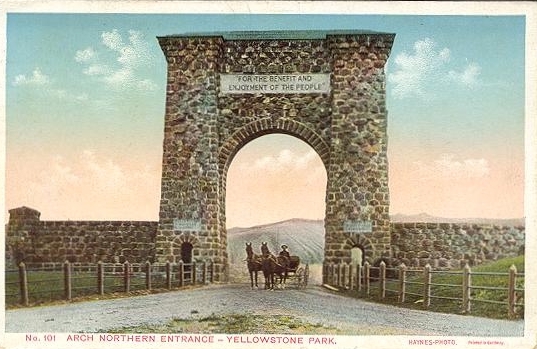
I passed into Yellowstone from Gardiner, Wyoming by way of the north entrance and the Roosevelt Arch, dedicated in 1903 by the park's champion, Teddy Roosevelt. The passage hummed with the great expectations of the thousands of others who had entered the park through this great gateway in the last 100 years, whether by foot, wagon or camper.
Then
...and now
As we left Gardiner, Harry and I were ushered across the threshold by a cow elk, the only elk we would see in or near the park. The elk was of interest to Harry (C-O-W)---the feeling was not mutual.

Rocky Mountain elk cow, by the Yellowstone River, Gardiner, MT.
After passing through the magic portal, I had one more stop before entering the park: the functional entrance gate. It was staffed by a female ranger with untidy hair and a patient smile.

"Welcome to Yellowstone" 

"Thanks, I'm so excited! I'm a Yellowstone virgin"

**blink, blink**

"Umm, this is your first visit?"

"Yes! First visit! I'm planning to head straight to Pebble Creek to get a campsite before they fill up..."

"That's a good plan. It filled up yesterday by 2:00. It's an hour's drive from here."

"Oh, it's only 9. Maybe I can dawdle a bit."

"Depends on what you mean by dawdling..."

"What amount of dawdling do you recommend?"

"Stick with your original plan."

I knew pretty quickly how difficult that would be. My plan was this: get my campsite---no dawdling. Then tour the Yellowstone loop and see the thermal features and some of the other classic sites, saving my ultimate goal, the legendary Lamar Valley (described as the American Serengeti), for the entirety of my second day. My pathway to Pebble Creek and a coveted campsite was delayed, in part, by forces external to me: traffic at Mammoth Hot Springs, bison road blocks...


And some were of my own doing, as I was unprepared for the visceral reaction to my first sight of the Lamar Valley. As I drove along the road connecting the north and northeastern gates (see purple route on this map) I kept wondering, as each new vista unfolded before me---was this the place? But you know when you're there. 

Pagoo arrives in the Lamar Valley
 At the vista point, as I looked down the hammock of green vale cut through its center by the snaking silver of the Lamar River, the theme song from Jurassic Park began playing, unbidden, in my head: "They do move in herds...". Sounds cheesy, I know, but I think I had stopped believing herds of large, wild, native creatures existed in America. The only evidence I had to the contrary had been indirectly delivered through Disney or PBS, but here I could breath the sage-scented air and hear the grunts of the bison bulls. During the precious moments absent the noise of man, I could almost believe I was transported to a time long before the internal combustion engine and the age of asphalt. In the eight mile reach of the valley cradles bison, pronghorn, bighorn, black-tailed deer, elk, grizzly and black bears, coyotes, bald eagles and grey wolves (my wolf experience deserving of its own blog).

Herd of American bison as they might have looked
 before the European invasion of the west. Lamar Valley, Yellowstone NP
Bighorn ewe and lamb graze near the road
                                         
                                      Bison bull flehmening at the scent of a receptive cow.
Bison bull, cow and pumpkin colored young calf
Herd of pronghorn led by a dominant male grazes on a hill rising up
from the floor of the Lamar Valley.

Pronghorn male with oozy scent glands on his cheeks.

Soda Butte at the northeastern end of the valley

I was unable to summon either bear species on this visit, I am told they were high in the mountains foraging on berries and moths. At the far north end of the valley, on the seemingly impossible vertical terrain of Baronnette Peak, I watched the balancing act of mountain goats as they led their kids from ledge to ledge, on the lookout for eagles that threaten to knock them from their tenuous hold.

Mountain goats are tiny white dots on the rock face
 of Baronnette Peak.
I had heard a great deal about the beauty of the rugged Tetons, but I think I prefer the soft edges I found here. I am a girl of the sagebrush and grasses, gentle cobbled river banks and dark blues and greys of river-worn rock and stone. Harry liked it too, although it is among the least dog friendly of wild places. It broke my heart to limit his experience of the place (and mine) to a 100 foot radius around the roads. My heart ached to hit the trails and the paths less traveled. But he got to see and smell the big game and roll in the ancestral aroma of a bison wallow and I was glad to have company with whom I could share my joy.

Harry finds a bison wallow irresistible.
I did manage to keep to some semblance of my original plan. After a tour of the full loop (see all the colors on the map) on the first day, I devoted all of the second and the morning of the third to the Lamar Valley. I made it to my lovely campsite at Pebble Creek and found it alive with butterflies and devoid of the sound of generators (they are banned at the campground).

Fritillary (Speyeria) species nectaring on aster,
Pebble Creek campground
Acmon blue (Plebejus acmon) on goldenrod
Before this visit, I had an image of Yellowstone in my head. It was one of long lines of cars and crowds of people gawking at a bored black bear strolling down a road. Maybe it's a stereotypic image---I did see some hints of that on occasion. Maybe I was cynical from my days as a keeper in drive-through zoos, where crowds and bored animals are the status quo. My message to you now, if you haven't yet been to Yellowstone, is GO. It is a miraculous, wondrous taste of what we once had before so much became corn, soybeans and cattle. It should be on your bucket list---if you've saved for a weekend in Vegas, go visit our Serengeti instead. If you can camp, this is a bargain destination: $25 to get in, $15 per night to stay at a campground. It will make your heart swell.

Monday, September 8, 2014

An Orphan's Child Comes Home: Princeton, Illinois

Pagoo and the mythical red covered bridge, Princeton, IL.
Just yesterday, while standing on the street where I was born, I felt very little emotion. I was not quite 2 years old when my father, weary and beaten by the high pressure life as a Chicago advertising artist and suburban parent, packed up his reluctant family and drove them across the country to Laguna Beach. There is not one among us who does not thank him, and as I stood on that street, that was my principal thought. What would my life have been like had we stayed in Palatine? The Krantz family house, so passionately and painfully conceived and realized by my parents, has been torn down and replaced with a soulless structure that could be from any town, any street in America. My heart was wholly unmoved by the place.

But if on that day I could not see and touch my father’s sweat and dreams, today I could walk in my mother’s footsteps. I drove 100 miles southwest of Palatine, where my mother gave birth to her five children, to Princeton, IL and the site of the orphanage where she, and her four siblings, lived most of their childhood.  I was guided there through my cell phone with the virtual eyes and heart of my brother, Richard, who had made this same pilgrimage with mom a decade ago. Since then the main structure of the orphanage has been torn down. It was my great privilege to be the first of our family to visit the sculpture garden that was dedicated in 2008 on the site where the building stood. As I walked through the garden and amongst the remaining original buildings I was overwhelmed with the sense of that little girl that was so at home on these grounds. My mother.
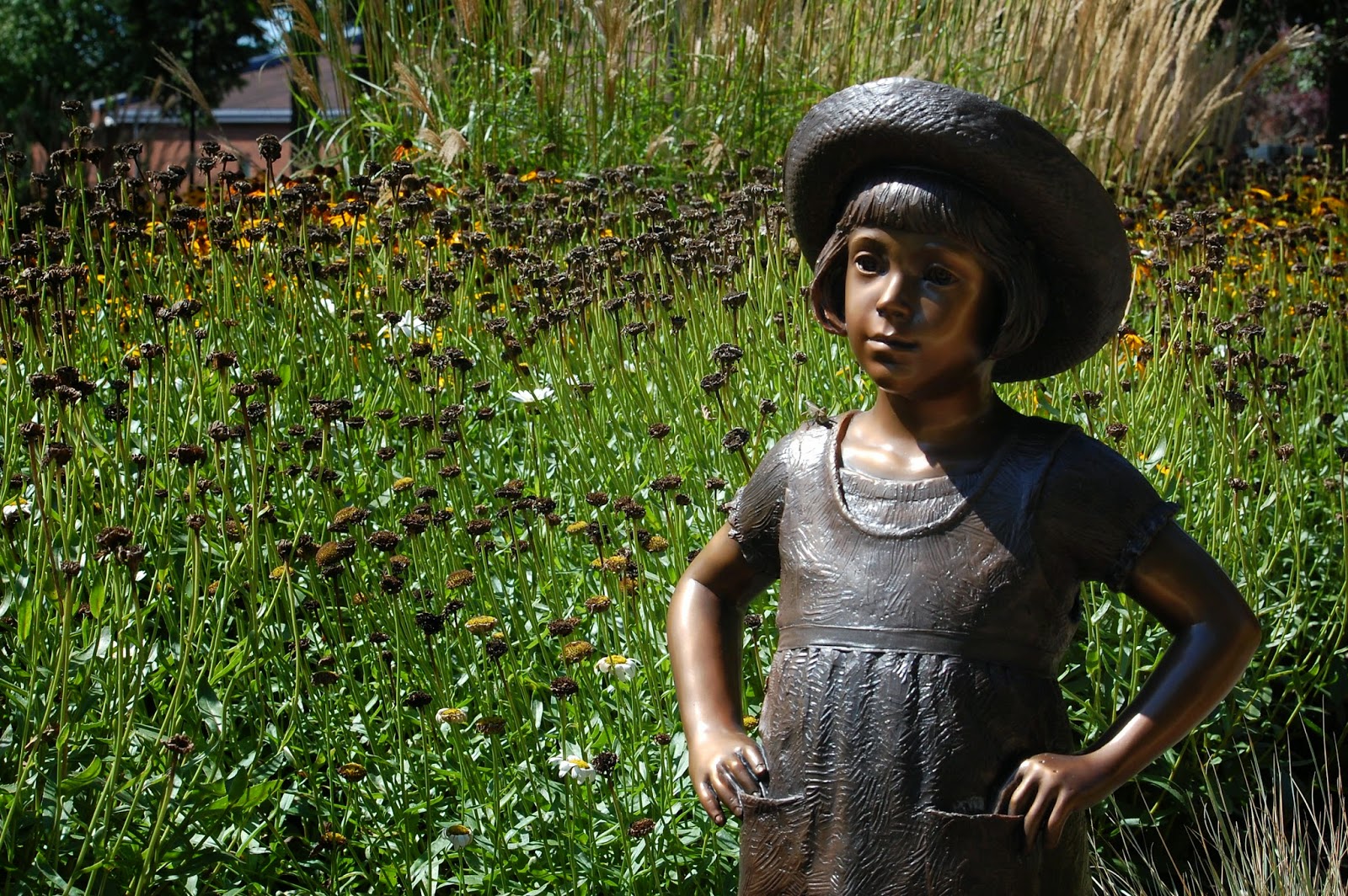


I think this sculpture looks remarkably like Mia as a little girl

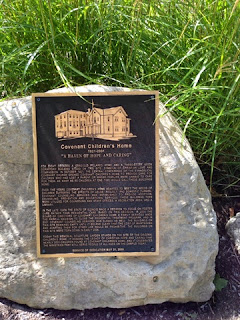
The dedication plaque. The garden was dedicated a month before Mia's death.
As I passed by one of the newer buildings (the Nelson chapel---perhaps named for the head mistress of the orphanage, Mrs. Nelson, a main character from mom’s stories of the place) my peripheral vision picked up a familiar site: a sculpture of my mom’s on a pedestal in the lobby. I froze in my tracks and gasped. I shook every door to get in, but they were all locked. I could only peer in through the glass. In my second blessing via cell phone today, a phone call to my sister Rebecca inspired me to seek out the maintenance man for the complex and rely upon his mercy to open the doors.
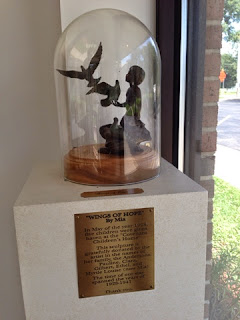
"Boy with the Birds" donated to the home by Mia in 2004

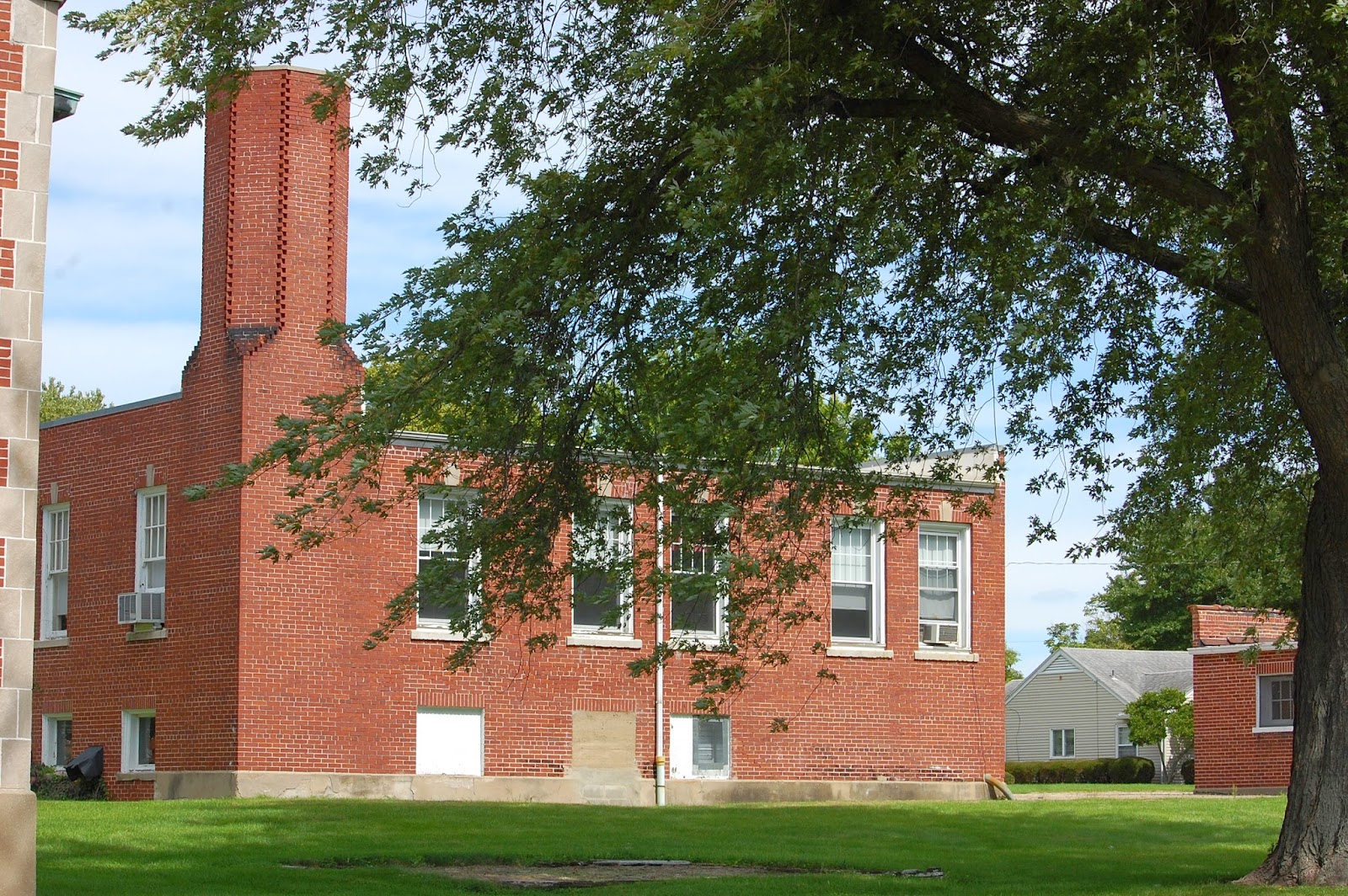
 I found him easily, his name was Steve (like my brother) and I was not the first descendant of an orphan to ask for his help. There had been many before me: some with deep complex mythology, like ours, and some with darker histories. "My mother, Mia, sculpted this," I shared with him. "This was her home." Steve showed me the original gymnasium where my mom had played, the boiler room and laundry where she had been tasked with rising before dawn to do the wash for all the residents, and the footprint of the playground and swing set where she had played and had her head scarred by a rusty swing.
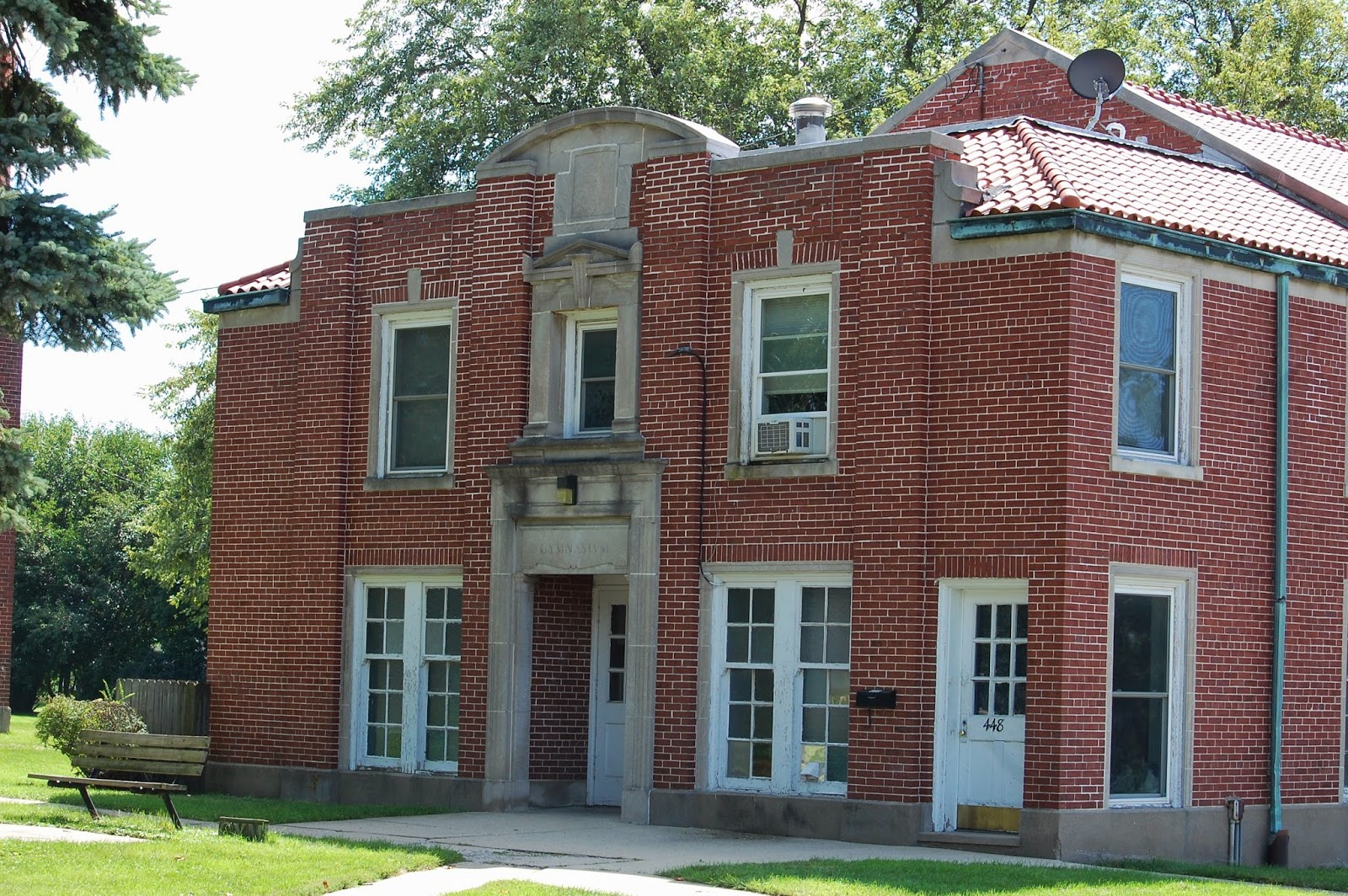
The original gymnasium, circa 1921

The boiler room and laundry. You can see an old sandbox in the foreground
The footprint of the swing set
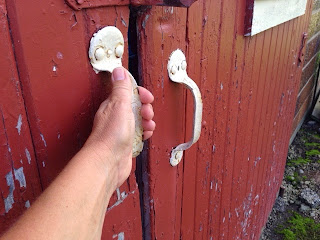
Grasping the door to the original barn
Before I left, I took a small yellow bottle from my pocket. In the bottle a precious sample of my mother’s ashes, now some to rest in the garden that grows where she once did.

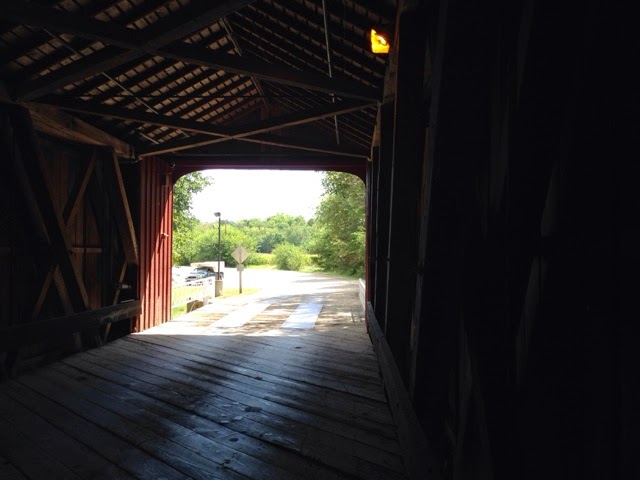
I had one more stop. Guided again by Richard, I found the red covered bridge two miles down the road that had been a favorite place of hers. 
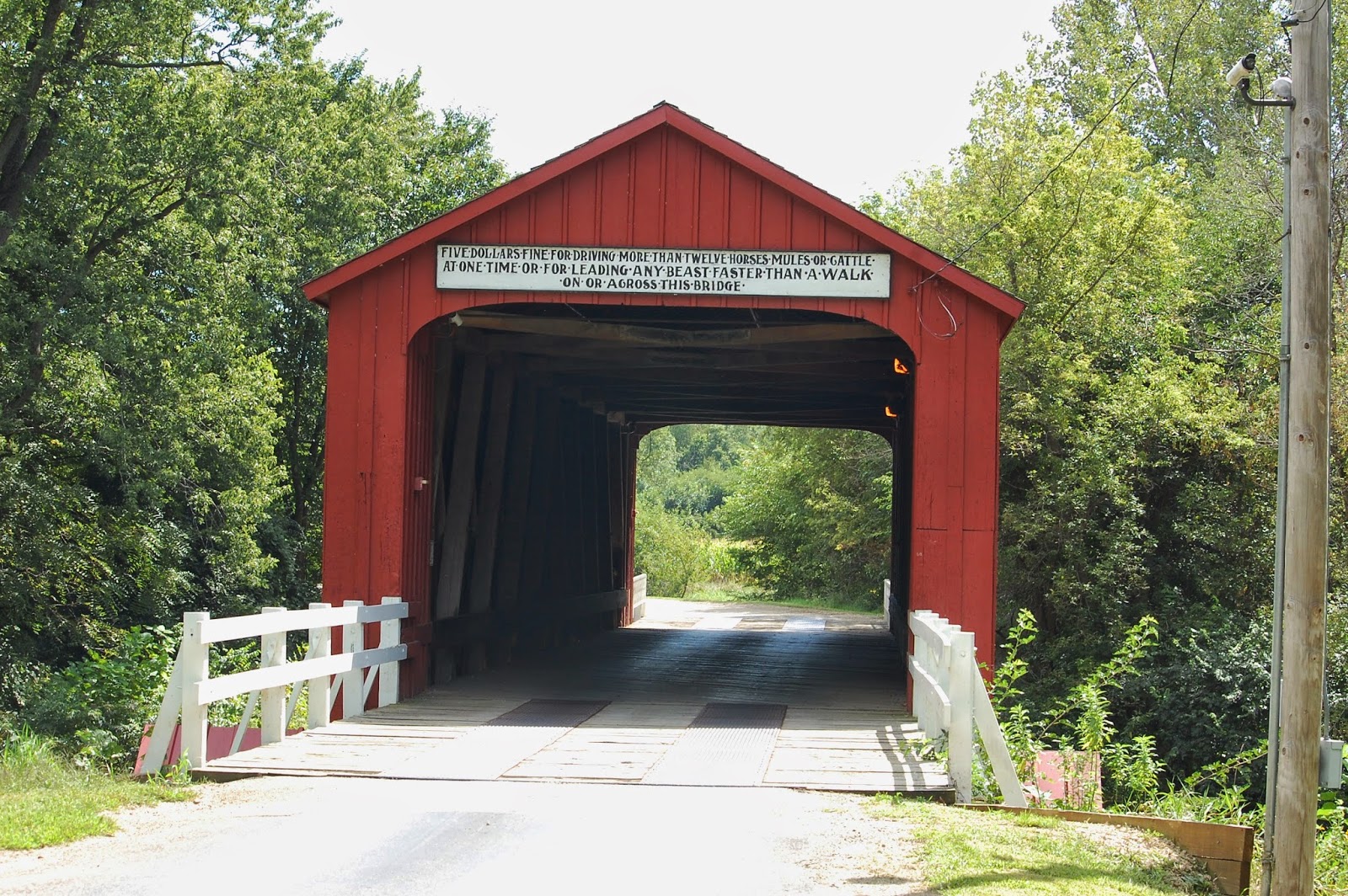
The Princeton Red Covered Bridge, Princeton, IL
More than 80 years ago a little girl named Myrtle Louise Anderson carved her initials boldly on the west end on the bridge. It took some searching for me to find them---they were smaller than I’d imagined---but I had a photo taken by my brother on their last visit to guide me. I traced each letter with my fingertip. Today, after many coats of paint and years of wear, the horizontal leg of the L has become faded.

My mother's initials carved on the bridge when she was a child
Maybe she knew even then she would be Mia.


Monday, September 1, 2014

Grasshopper Days: Montana

Panoramic view of the Flathead River from the National Bison Range, Montana
One of the benefits of having mentored dozens of interns over the years, is that interns often fly off to further adventures in interesting places. On the Flathead Indian Reservation in Montana, Harry and I find the second of three interns to host us along the way. Katie helped me track sea otters last summer and now she is participating in a long-term study of grasshopper populations on the National Bison Range near St. Ignatius, MT. and she has a spot to park Pagoo. The drive from Coeur D’Alene was supposed to have taken 2 ½ hours---a piece of cake. I now think the shorter the expected drive, the more time I feel I have for dawdling. And so it took me 6 hours. As I made one of the last turns towards Katie’s field station, I sent her a message that I was 15 minutes out. I meant 45. Montana is amazing, you see, and Katie’s house in in the basin of the once flooded glacial Lake Missoula surrounded by mountains, including the Mission Range, that just 15,000 years ago were islands. It is a painter's dream: viridian prairie rimmed with mountains of Payne’s Grey and sky of cerulean. But that is only the shiny wrapper for an abundance of small jewels. What kept me the last 45 minutes were some of the micro denizens---the roadside and fields were flashing the Morse code of a thousand butterfly wings. 
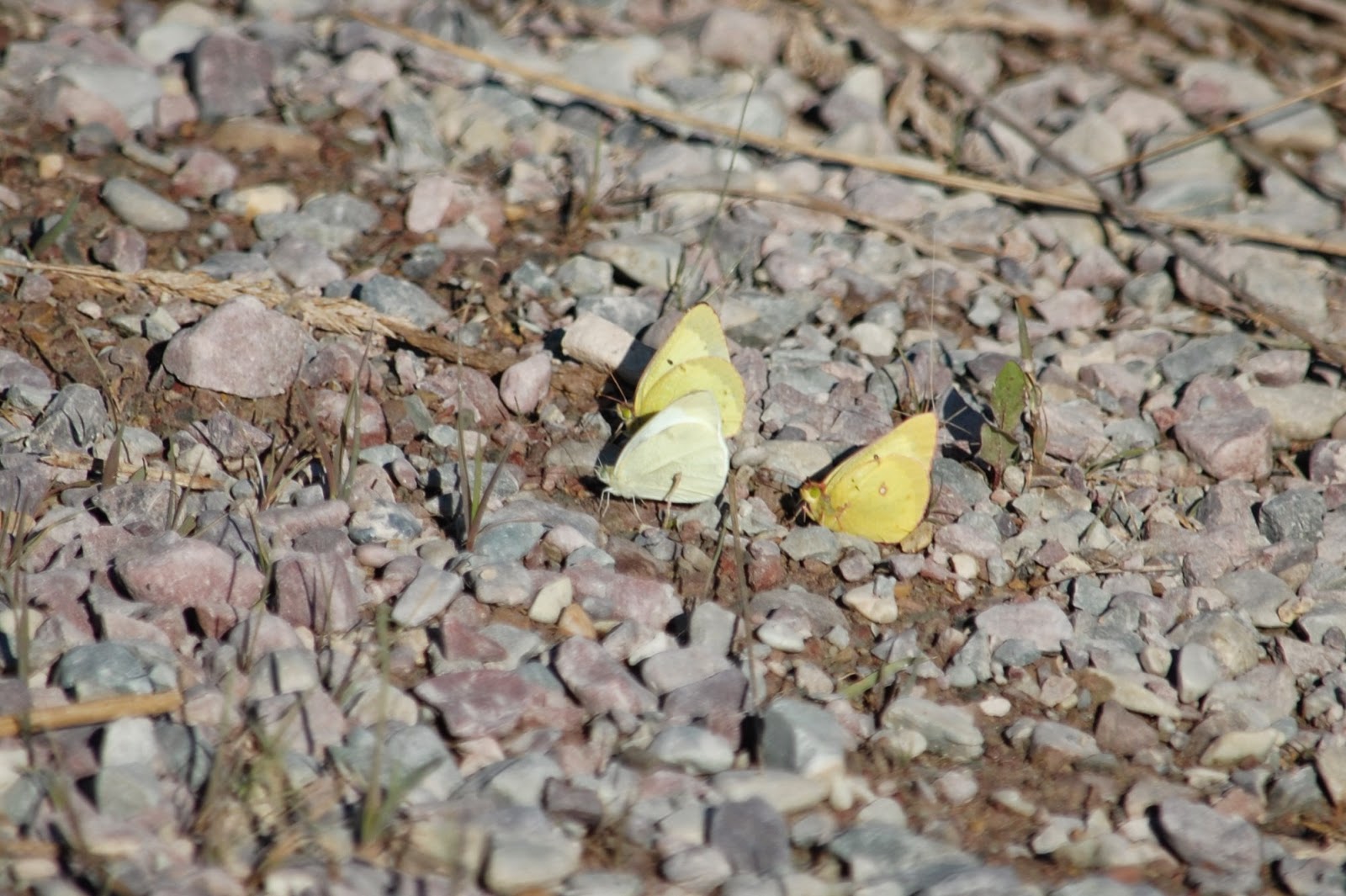
Sulphur butterfly species at the roadside
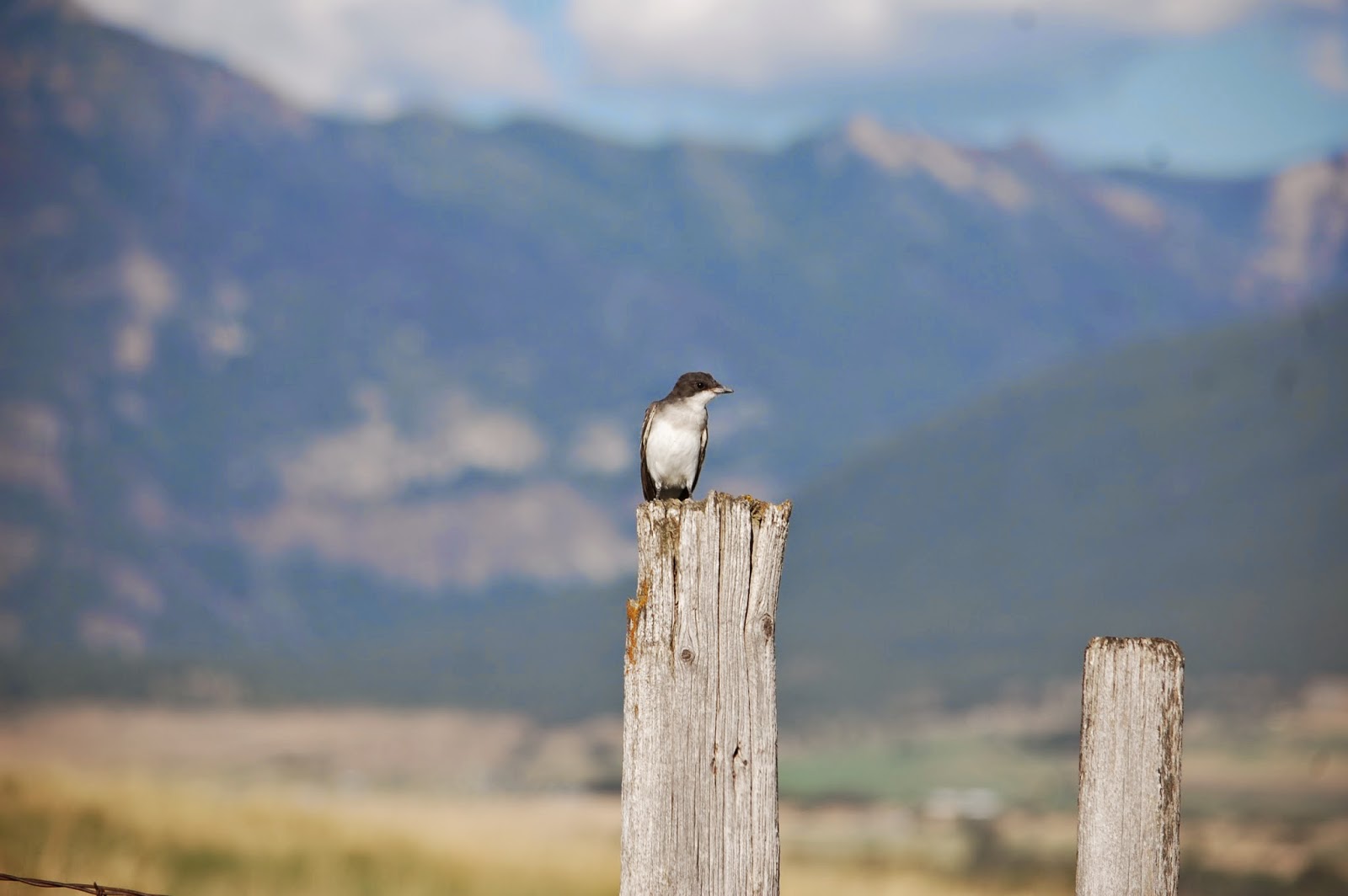
The fields were planted with alfalfa which was blooming purple and fragrant and is food for sulphur butterfly caterpillars, brilliant in shades of the palest cream to lemon yellow. Two species of sulphurs are fond of alfalfa: the orange (Colias eurytheme) and clouded (Colias philodice). Their ranges overlap and they hybridize, so if you look at my iNat observation you'll see I could not commit (and neither could anyone else). What I am sure of, is that sight of thousands of yellow butterflies over a field of purple with stay with me forever. I made it past the sulphers only to be waylaid further by a charming eastern kingbird following Pagoo from fence post to fence post for the last few hundred yards of road.

Eastern kingbird
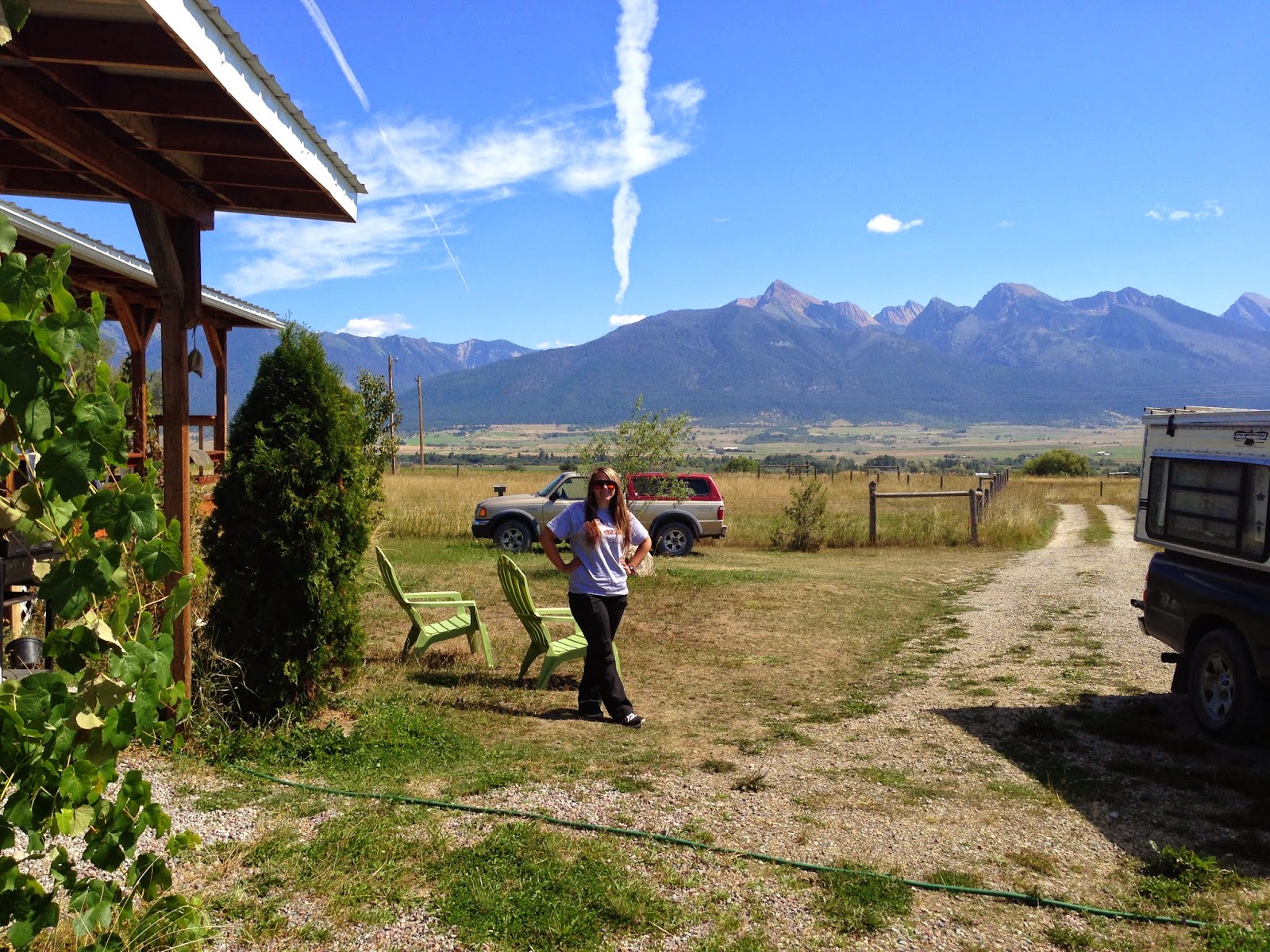
However transfixing, I finally make it through the gauntlet of wildlife and soon am turning onto Katie’s driveway and I she is waving a greeting from her front yard.

Katie at her field house near St. Ignatius, MT. The Mission Range is in the background. 
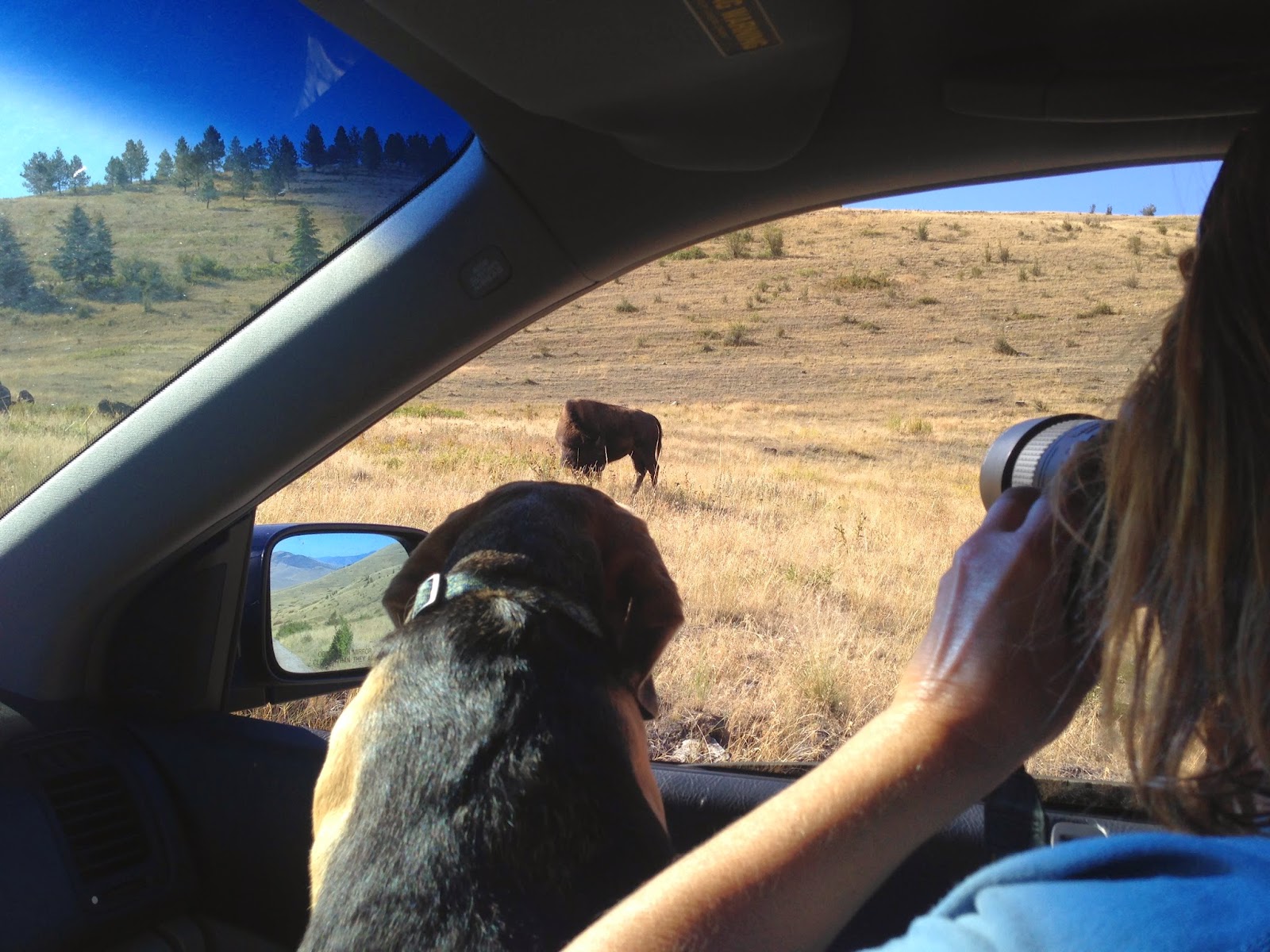
The next morning we leave Pagoo parked and charging up at the field house, while Katie drives Harry and me to the  Bison Range where the grasshopper study sites have been monitored for 30 years. This serves as our training day for Yellowstone  and we look for bison, bighorn, elk, white-tailed deer and pronghorn. What will Harry think of large "cows" so close to the car?

Harry knows a cow when he sees one!
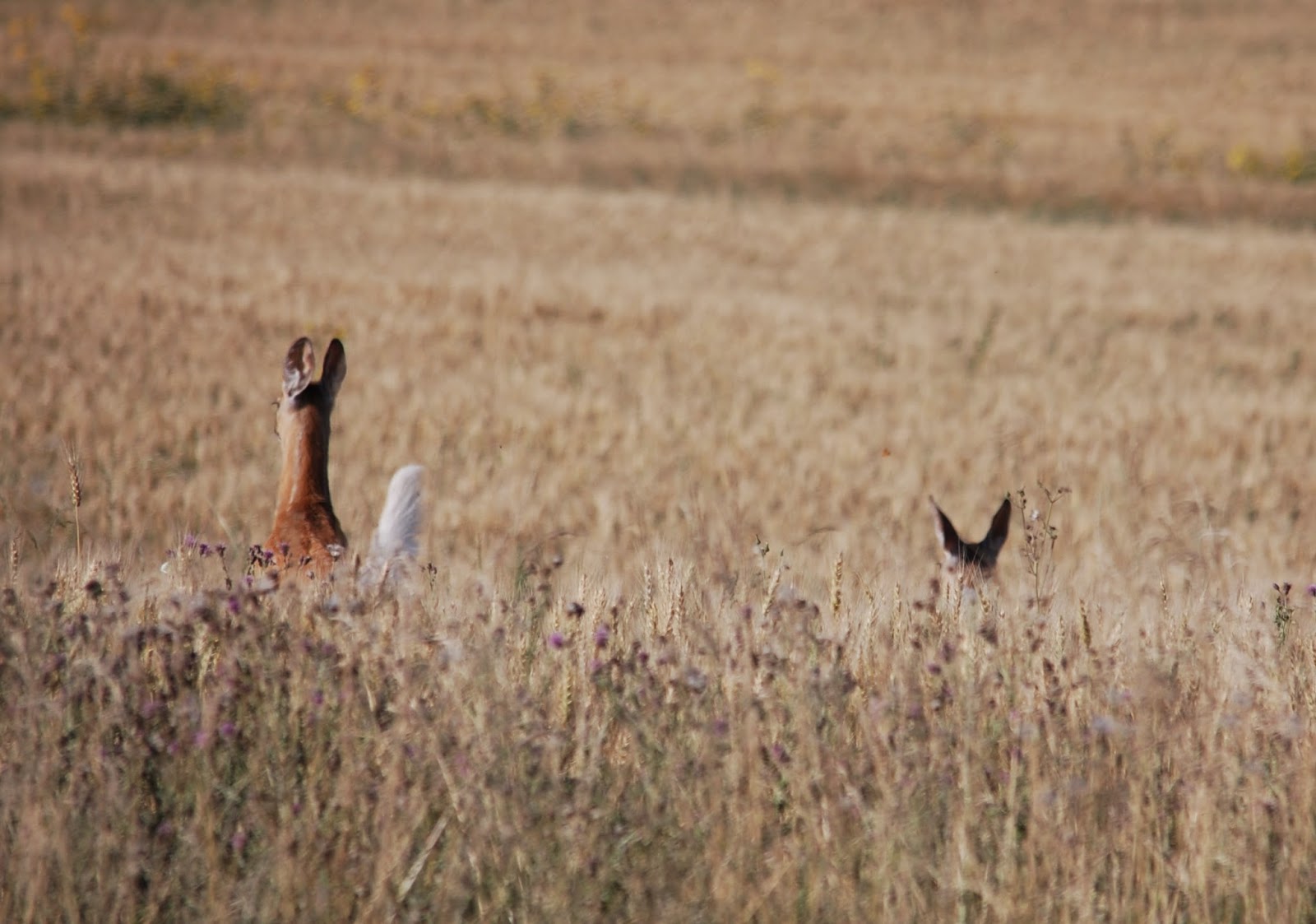
White-tailed deer fawns, hidden in the tall grass, flee as we drive by.

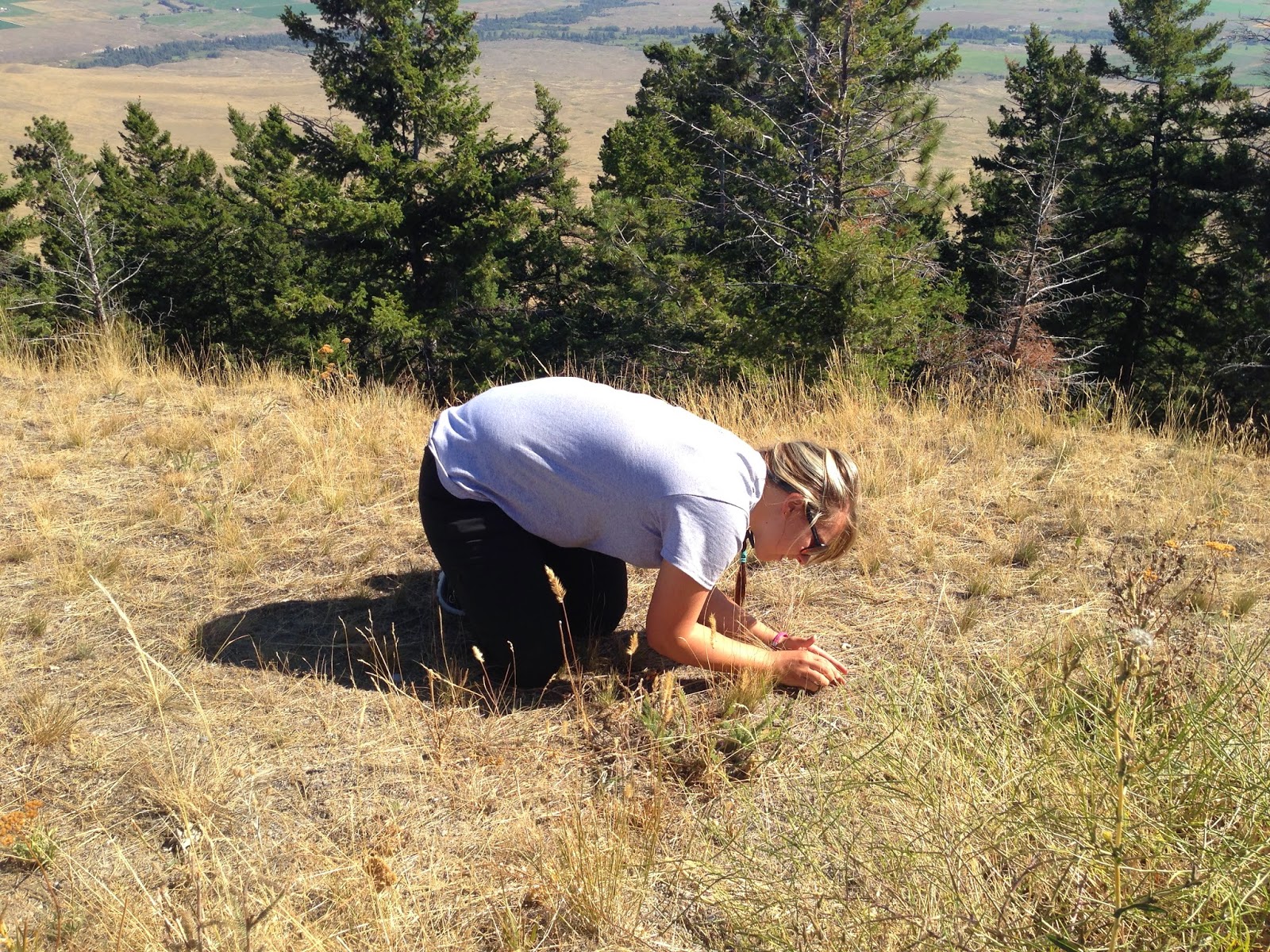
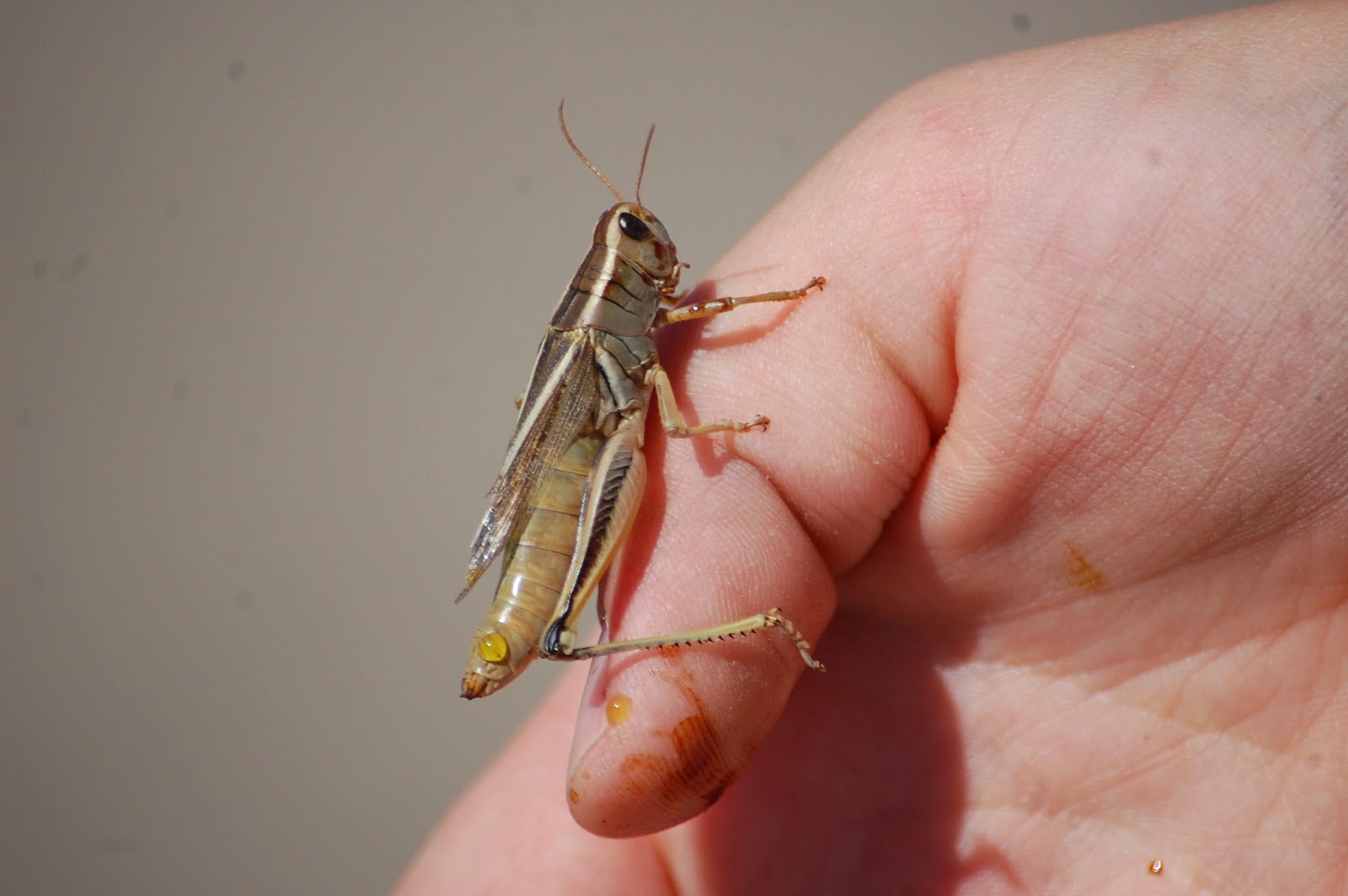
A giant bull bison 3 feet away is spectacular, but what I find most fascinating this day is an exploration of creatures that often go unnoticed beneath our footsteps---grasshoppers. These charismatic insects (you have read James and the Giant Peach, haven’t you?) are abundant in many of open spaces around the world, but here in the Montana grasslands the ground is alive with them. All you need do is set one foot off the trail or road to see what was invisible appear and flutter (only to become cloaked again when still). There are about 11,000 described species of grasshoppers globally and probably many more as yet undescribed. As Katie expertly hopped about (much like a grasshopper, now that I think about it) pouncing with cupped palms to retrieve different species for my admiration, she explained the difference between a grasshopper and a locust, and I learned something new: a species that remains locally abundant is a grasshopper, but if that same species (see Melanoplus bivitattus below) begins to migrate, or swarm, it becomes a locust. It’s amazing how that tiniest bit of knowledge can bring me such joy and excitement---51 years old and I never knew what a locust was!  So, yes, the bison and pronghorn are cool---in just a few days I would be fully enamored with the mega-fauna of America’s Serengeti---but don't forget to admire the little things!

Katie catching grasshoppers
Two-striped grasshopper, Melanoplus bivitattus. The liquid is ejected as a defense.
Many thanks to Katie for enthusiastically giving me a tour of the place she works every day, and for letting me take a much needed shower, wash my dirty clothes, and drink a glass of wine with a friend and a view. I think Harry misses his otter "girls", and he was glad to have her attention and affection. I should also clarify that palm-cupped hopping is not Katie's professional method of grasshopper capture---we were absent her usual gear since the intention of the trip was big rather than tiny game. 

One note on the wine, I started out planning to drink alcohol only in a social context during this trip and I have stuck to that with ease. Don't get me wrong, I am a great appreciator of libation and am unlikely to ever abstain. I do think I had come to use it as a tonic to help quiet the unhelpful chatter in my brain. It seems the road works just as well.